








Colors.
Like notes in a symphony, colors come together to create a one-of-a-kind harmony of beauty and expression. They illuminate the world we live in, weaving a vibrant fabric of life that surrounds us at all times.
Colors are an integral part of who we are and what we go through in life. They have the ability to elicit emotions, memories, and a sense of place. Each color has a distinct significance and influence on our lives, and we can use them to communicate our thoughts and feelings while also bringing joy and beauty into the world.
The Fundamental Three of Design
In art and design, the entire spectrum of colors that we see can be created using just three colors—red, yellow, and blue. These three colors are known as the primary colors in the color wheel used in these fields. They are the foundation for all other colors. When mixed in equal parts, they produce secondary colors—orange, green, and purple.
For years, the RYB color model has been used in conventional art and design to create color harmony and balance. With the help of just these three colors, artists and designers can create entire worlds of beauty and vibrancy that can arouse countless emotions, create desired moods, and express ideas by knowing the relationships between primary and secondary colors.
Being admirers and patrons of everything art and design, we decided to set out on a journey to discover the magic of red, blue, and yellow in the natural and artistic realms, and in the process, we have created a series on primary colors in nature, art, architecture, and jewelry.
The Radiant Reds

Red Maple during autumn on Lower Ferry Road in Ewing, New Jersey
Image courtesy: Wikimedia Commons

Maple Tree in Autumn
Image courtesy: Unsplash

Kalamkari Rumal
Delightful scenes fill the ground of this rumal: a music performance; a look between lovers; figures sewing, hunting, and dancing; and a royal group. Although unrelated, the vignettes are united by the application of pattern to all elements of the textile and a busy background of trees, plants, rocky outcrops, and animals in action.
Source and image courtesy: The Met Museum

Floral Brocade
Raw silk as well as silk velvets and brocades were major exports to Europe from the Safavid Empire. Contemporary paintings show that rich brocades were equally popular for clothing among the Iranian aristocracy. This fragment has a dark red ground with rows of stylized composite flowers in shades of green, blue, white, tan, and pink arranged in straight rows paired with abstract sundry leaves. Like their Mughal and Deccan counterparts, such textiles may have been inspired by printed Dutch and English botanicals.
Source and image courtesy: The Met Museum

Humayun’s Tomb, India
Image courtesy: Hippopx

Gateway to the Taj Mahal
This painting depicts the gateway to the Taj Mahal, built by the Mughal Emperor Shah Jahan to commemorate his deceased wife, Arjumand Banu Begum, better known as Mumtaz Mahal ('Elect of the Palace'), who died in 1631, shortly after giving birth to their fourteenth child. Work was begun in 1632, and the mausoleum was completed in 1643. The gateway to the Taj Mahal is made of red brick with pietra dura inlay.
Source and image courtesy: Victoria and Albert Museum

Donned between the partition of the hair, sindoor, also known as kumkum, or vermillion, is perhaps the holiest and the most significant symbol of matrimony for Hindu women. Applied by her husband for the time on the day of their wedding, the bright, red-colored sindoor is a mark of his existence in her life.
Image courtesy: Wikimedia Commons
The Yearnful Yellows

Bright mustard fields
Image courtesy: Pexels

The mustard fields were turned into a popular place and symbol of love by the iconic Bollywood movie, Dilwaale Dulhaniya Le Jayenge
Image courtesy: Scroll.in

Marigold, the flower synonymous with festivities, wedding and otherwise
Image courtesy: Pinterest

Ragini Suhavi, wife of Megha raga: Page from a Ragamala series, Circle of Devidasa, Nurpur or Basohli, c. 1685–88
Source and image courtesy: Francesca Galloway

Interior of Yeni Cami, Istanbul
Image courtesy: rawpixel

Durbar Hall, Amba Vilas Palace (Mysore Palace), India
Image courtesy: Wikimedia Commons

A still of a Haldi ceremony, in which paste of haldi (turmeric), oil, gramme flour, milk/curd, and other natural ingredients is applied to the bride and groom's faces and bodies. Its use represents their cleansing from all impurities before embarking on their shared journey.
Image courtesy: PixaHive
The Beautiful Blues

The breathtakingly beautiful sky represented through masterful strokes by Vincent van Gogh in his iconic painting, The Starry Night
Image courtesy: Wikimedia Commons

The towering waves in Katsushika Hokusai's The Great Wave off Kanagawa
Image courtesy: Wikimedia Commons

Nandi Ceiling fresco, Brihadeshwara Temple, India
Image courtesy: Wikimedia Commons

Alleys of Chefchaouen, Morocco
Image courtesy: The World Pursuit

Chhavi Niwas, Jaipur City Palace, India
Image courtesy: Wikimedia Commons

Blue pottery of Jaipur
Image courtesy: Pinterest
The Primaries in Jewelry
Just as red, yellow, and blue are the precious primaries in an artist’s palette, jewelry also has its own primaries. Conventionally, rubies, sapphires, diamonds, and emeralds are considered to be the most precious gemstones. However, sometimes, the cut, the rarity, and the size of a gemstone can make it more “precious” than the traditionally precious stones.

Khwabeeda ruby and diamond necklace by Aurus

From sketch to reality: A rendition of the Guttapusalu necklace by Aurus

Shining bright like the sun: Soorya choker by Aurus

Inspired by the opulent Indian heritage: Malar gold necklace by Aurus

Symbolizing pride, majesty and the celestial world: Leela Peacock necklace by Aurus
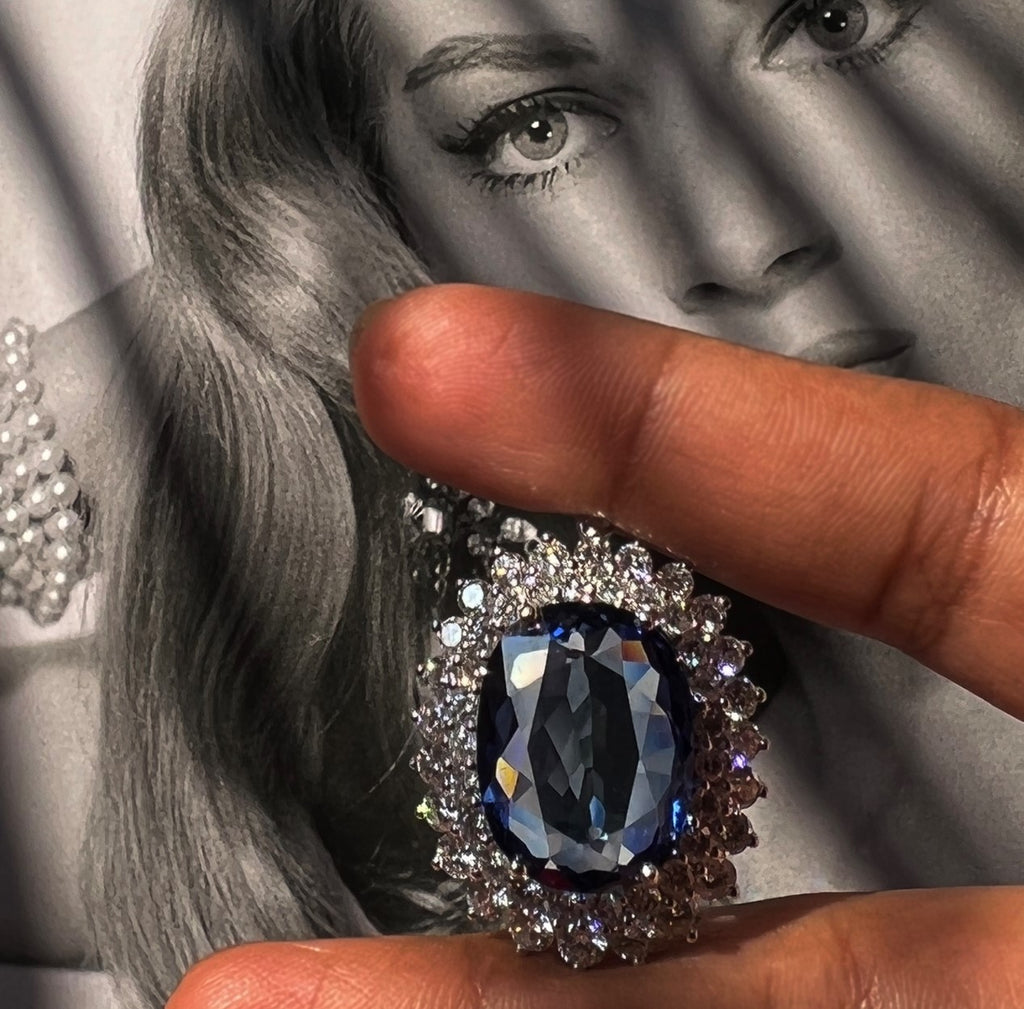
A blue deeper than the deepest ocean: Blue sapphire pendant surround by diamond petals by Aurus
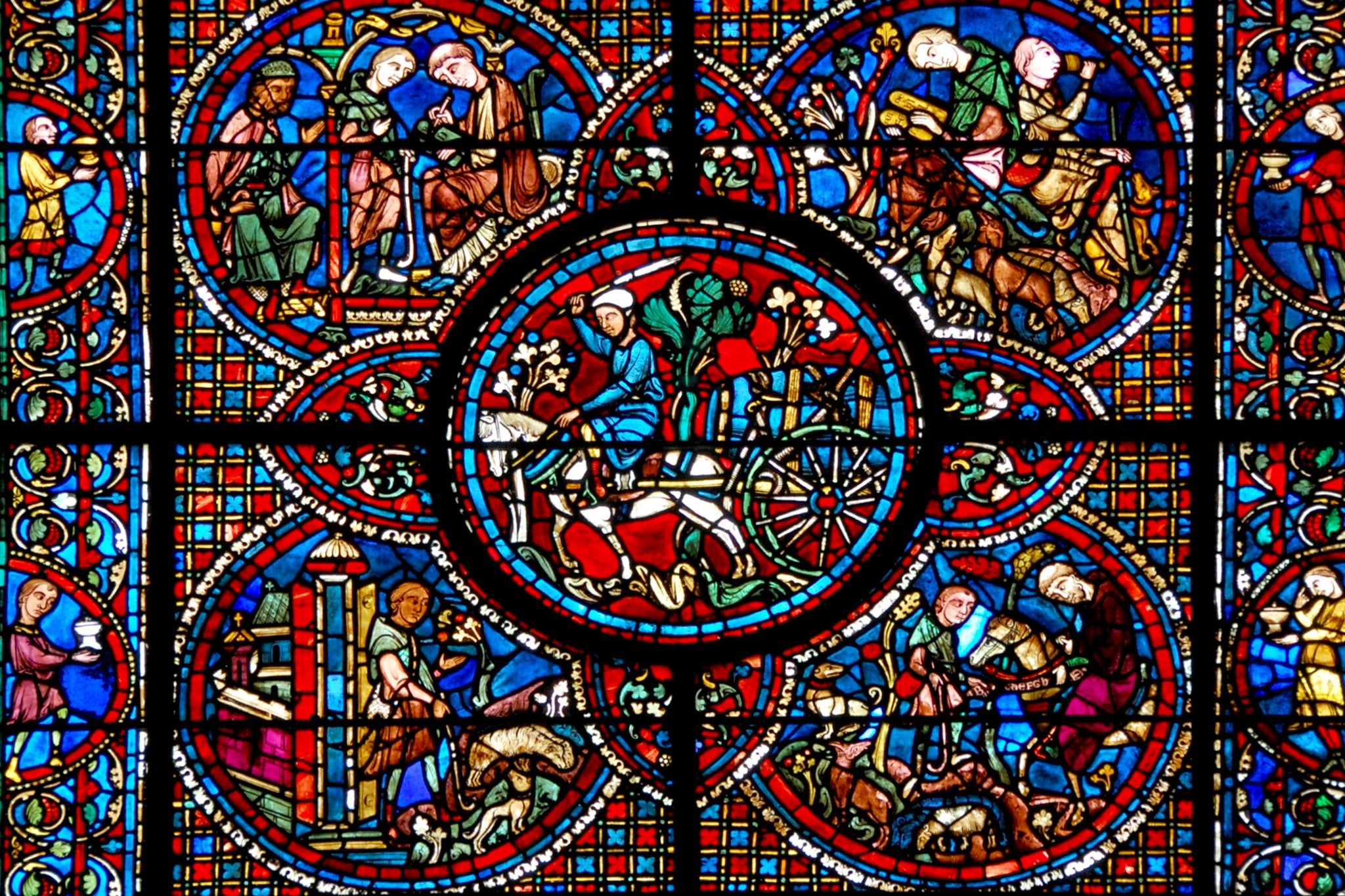
Featured image: Cathédrale Notre-Dame de Chartres
Image courtesy: Flickr


