









The first fortnight of 2023 is almost over, and with it is going to be over the time of the winter. The Sun leaves the constellation of Sagittarius and prepares to enter the constellation of Capricorn. This transition is celebrated across the Indian subcontinent. The festival marking this transition is called Makar Sankranti, Makar being the Hindi name for Capricorn, and Sankranti meaning transmigration of the Sun from one constellation to another in Indian astronomy.
The festival of Makar Sankranti is devoted to the solar deity, Surya, and is observed to signify a new beginning because the Sun is thought to have migrated from the southern to the northern hemisphere on this day in the Hindu calendar. For this reason, the festival is also called Uttarayan—indicating a semantic transition of the sun from the north to the south in the celestial sphere, uttar meaning north and ayana meaning movement.
Makar Sankranti is considered important for spiritual practices, so people take a holy dip in rivers, particularly the Ganga, Yamuna, Godavari, Krishna, and Kaveri. Bathing is thought to lead to merit or forgiveness of past sins. They also thank the sun for their success and prosperity.

Image courtesy: Wikimedia Commons
Makar Sankranti Celebrations Across the Country
Makar Sankranti is a significant pan-Indian solar festival known by various names but marked on the same date, 14 January, sometimes even for multiple dates surrounding Makar Sankranti, and the festivities related to Makar Sankranti are known by different names across different states and cultures.
North
In the northern states, the festive celebrations of Makar Sankranti involve ceremonial dips in holy rivers, sweets, and fairs. People also prepare khichdi and kheer at their homes and eat it with their close ones. In Kashmir, there is a Dogra tradition of Mansana (charity) of Khichdi of maah daal, and is also known as Khichdi Wala Parva.

Image courtesy: Wikimedia Commons
Makar Sankranti is known as Maghi in Punjab. Sikhs honor the martyrdom of the forty Sikhs (Chalis Mukte) who fought alongside the tenth Sikh Guru, Guru Gobind Singh, against the Mughal Empire army led by Wazir Khan in 1705 and gave their lives defending their land against the Mughals.
West
Consuming and sharing sweets such as til laddoos, kheer, and chikki, as well as inviting people to festive meals, is a common practice in the western states. Women in Rajasthan perform a ritual in which they give any object (related to household, make-up, or food) to 13 married women. The first Sankranti that a married woman celebrates is significant because she is invited to her parents' and brothers' homes with her husband for a large feast. In Maharashtra, married women invite friends and family to celebrate Haldi-Kunku. On this day, both Hindu men and women wear black clothing.

Haldi-Kunku
Image courtesy: Wikimedia Commons
In Gujarat, Makar Sankranti is known as Uttarayan, and people eagerly await the two-day festival to fly kites. This day's special festival recipes include undhiyu (a spicy, baked mix of winter vegetables) and chikkis (made from til, peanuts, and jaggery). The day has been celebrated as the International Kite Festival in Gujarat's Ahmedabad since 1989.

Image courtesy: Flickr
East
The festival holds different kinds of significance in different states. It is known as the Hangrai festival in Tripura. It began as a festival of immersing ancestors' remains in the holy river. It has since been adopted and popularized by other groups in India. Houses are cleaned, washed, whitewashed, and decorated. All utensils, clothes, and articles are also cleaned. Tripura cakes, dishes, and drinks are prepared, and close friends and relatives are invited to a feast.

Poy MeJi
Image courtesy: Wikimedia Commons
In Assam, the festival is called Magh Bihu. Feasts and bonfires are held as part of the festival. Young people build improvised huts called Meji and Bhelaghar out of bamboo, leaves, and thatch, and eat the food prepared for the feast inside it before burning the huts the next morning. Traditional Assamese games such as tekeli bhonga (pot-breaking) and buffalo fighting are also part of the festivities.
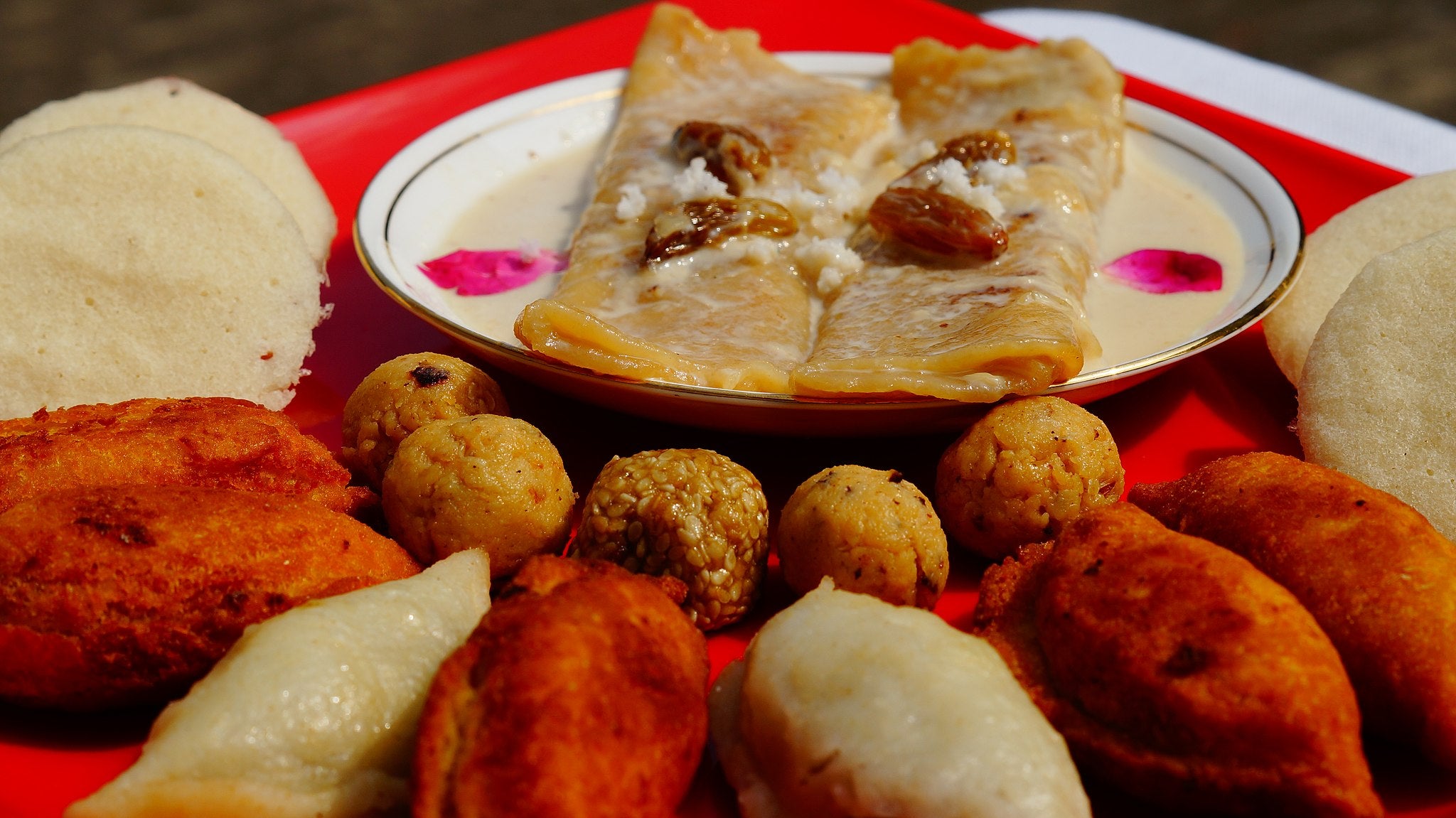
Sankranti is also known as Poush Sankranti in West Bengal. Khejurer Gur is made from freshly harvested paddy and date palm syrup. Everyone in society takes part in a three-day festival that starts the day before Sankranti and ends the day after. People worship Goddess Lakshmi during the festival. Sankranti is known as Magey Sakrati in the Himalayan regions of Darjeeling. It is strongly associated with Lord Shiva worship. People traditionally bathe at sunrise before beginning their pooja.

Puli Pitha
Image courtesy: Wikimedia Commons
South
Sankranti is an important and elaborate four-day festival in southern states, particularly Andhra Pradesh, Telangana, and Tamil Nadu. Telugu Hindu women decorate their homes' entrances with geometric patterns drawn with colored rice flour, known as Muggu.

Image courtesy: Wikimedia Commons
In Andhra and Telangana, the days are:
Bhogi is the first day of the four-day festival. It is commemorated with a bonfire made of wood logs, other solid fuels, and old wooden furniture at home. In the evening, during a ceremony known as Bhogi Pallu, harvest fruits such as regi pallu and sugarcane are collected, along with seasonal flowers. Money is frequently mixed with treats and poured over children.
Sankranti, the main festival day, is on day 2. The god is served Ariselu, a traditional sweet dish.
Day 3 is Kanuma. On this day, cattle and other domestic animals are honored. Popular community sports Kodi Pandem is played, particularly in Andhra Pradesh's Coastal region.
Mukkanuma is the last day of the festival and families hold gatherings on this day.
In Tamil Nadu, the days are:
Day 1 is called Bhogi Pandigai. It is marked by tossing and burning old clothes and materials, symbolizing the end of the old and the beginning of the new.
Thai Pongal is day 2. It is observed by boiling rice with fresh milk and jaggery in new pots. It is allowed to boil over the vessel early in the morning. The tradition is to shout “Ponggalo Ponggal!” and blow a conch when the rice boils over and bubbles out of the vessel, a custom practiced to announce that the year would be blessed with good tidings.

Image courtesy: Wikimedia Commons
Maattu Pongal is celebrated on day 3. It is for thanking cattle for their assistance to farmers in agriculture. The cattle are adorned with paint, flowers, and bells on this day. In some places, the main event of this day is the Jallikattu, or taming the wild bull contest.
Day 4 is celebrated as Kaanum Pongal. On this day, people visit their friends and family to celebrate the festive season.
In Karnataka, girls wear new clothes to visit relatives and exchange Sankranti offerings on plates with other families. Newlywed women give away bananas to married women for five years. Kite flying, rangoli drawing, and the distribution of red berries known as Yalchi Kai are all integral parts of the festival.
The festival is known as Sankranti or Makara Sankranti in Kerala. This was once celebrated in Malabar villages as a victory over a demon. On this day, the Makaravilakku in Sabarimala is lit.


