









The image of an Indian bride is often incomplete without jewellery.
Long before the first photograph is taken or the first ritual begins, jewellery becomes part of the transformation. It adds colour, heritage, sparkle, and emotion to the bridal ensemble in a way few accessories can.
But what jewellery does an Indian bride actually wear today?
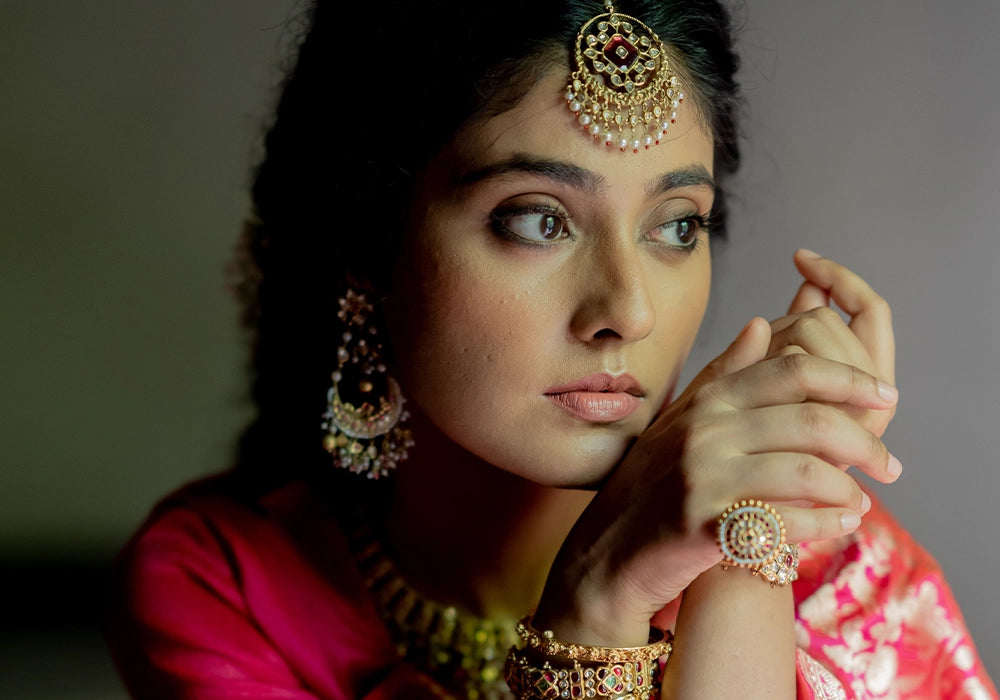
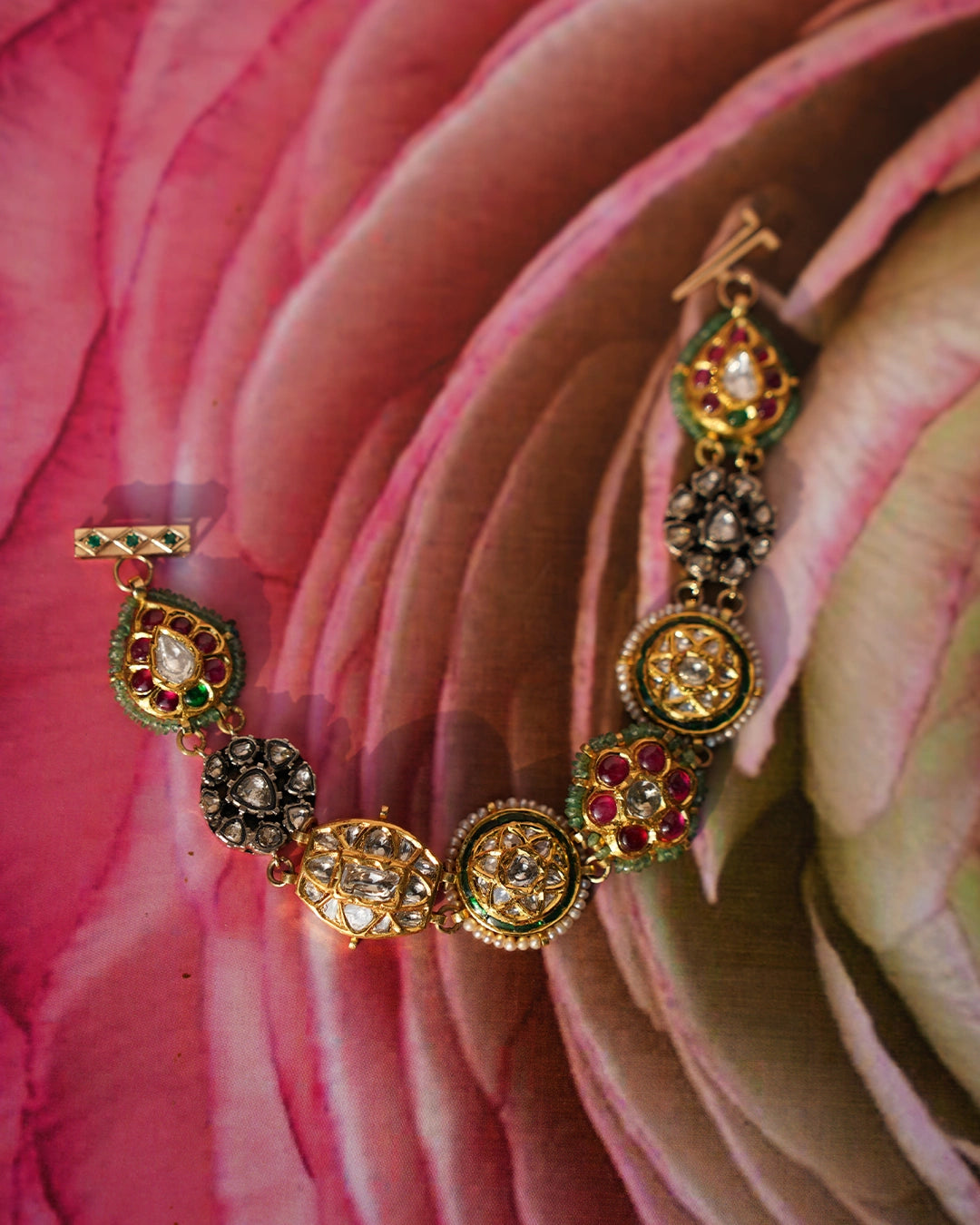
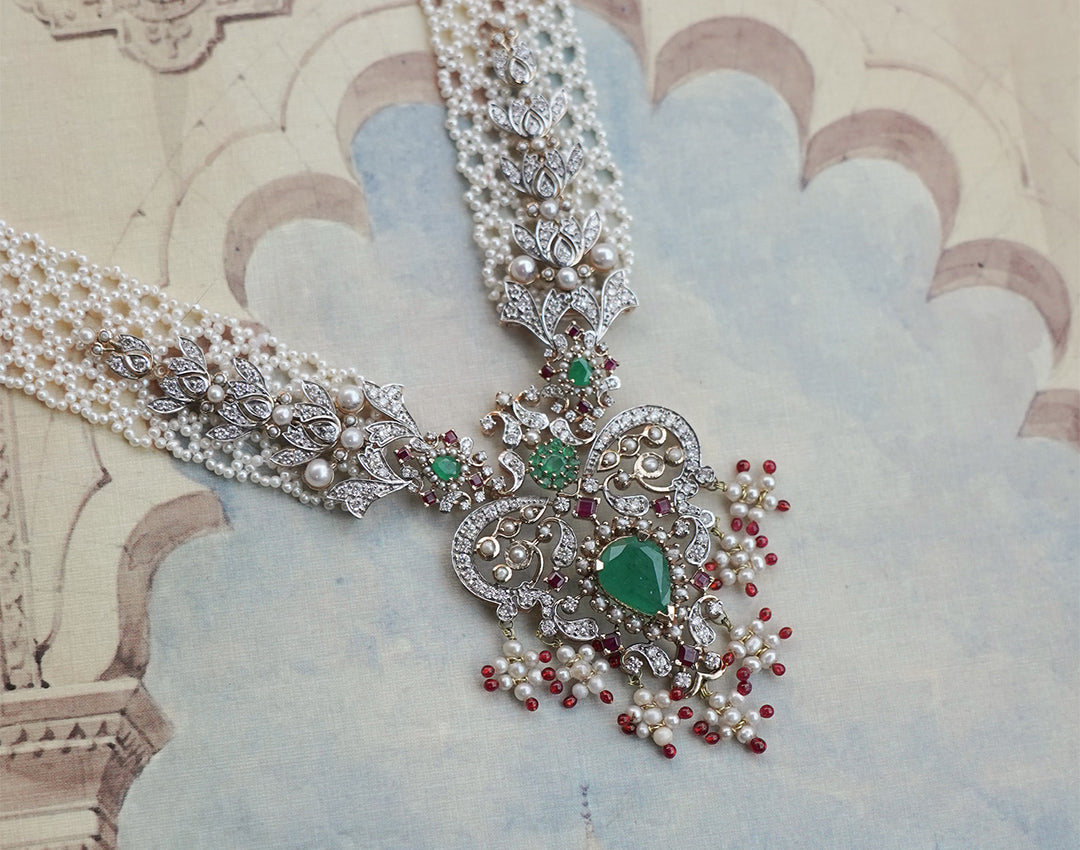
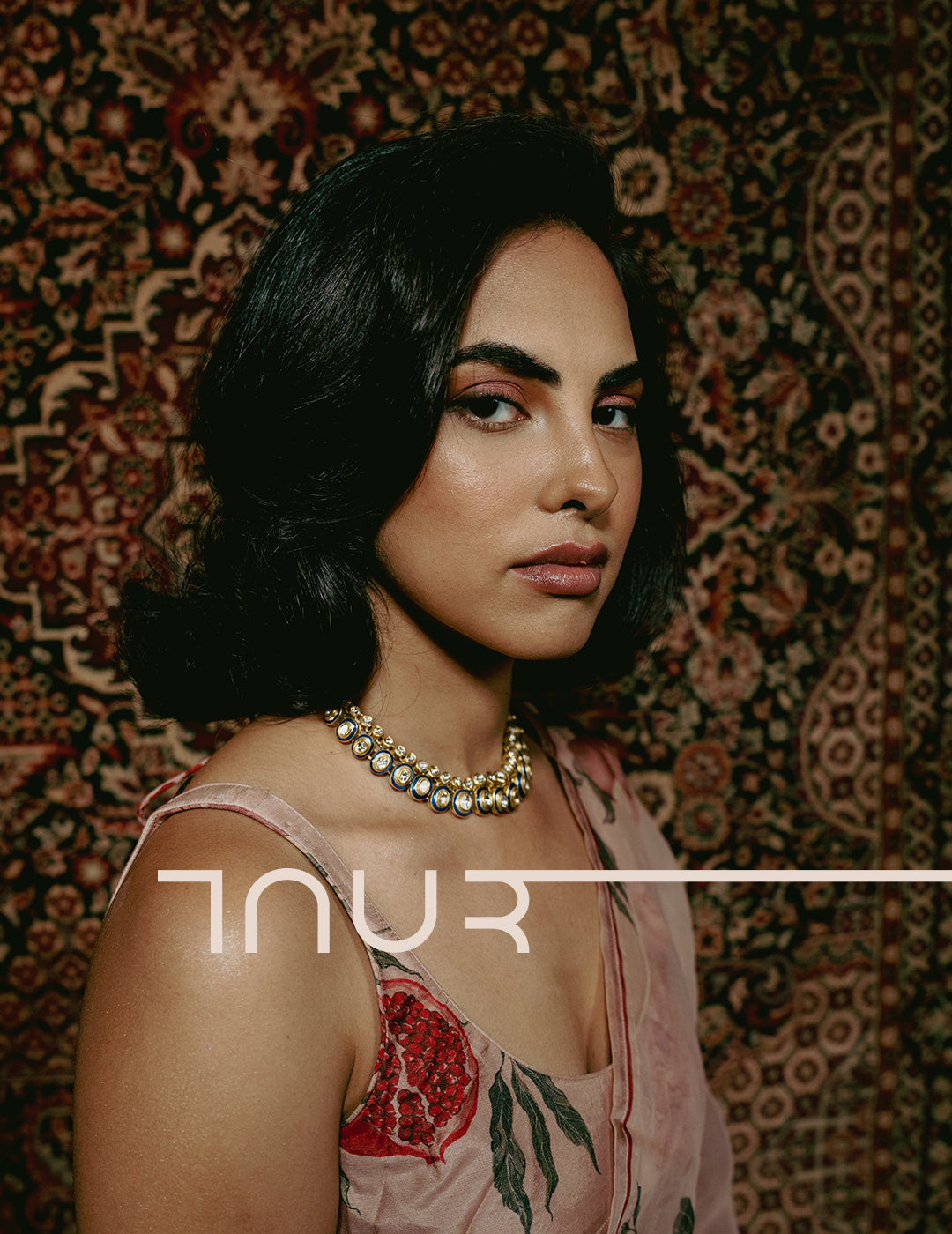
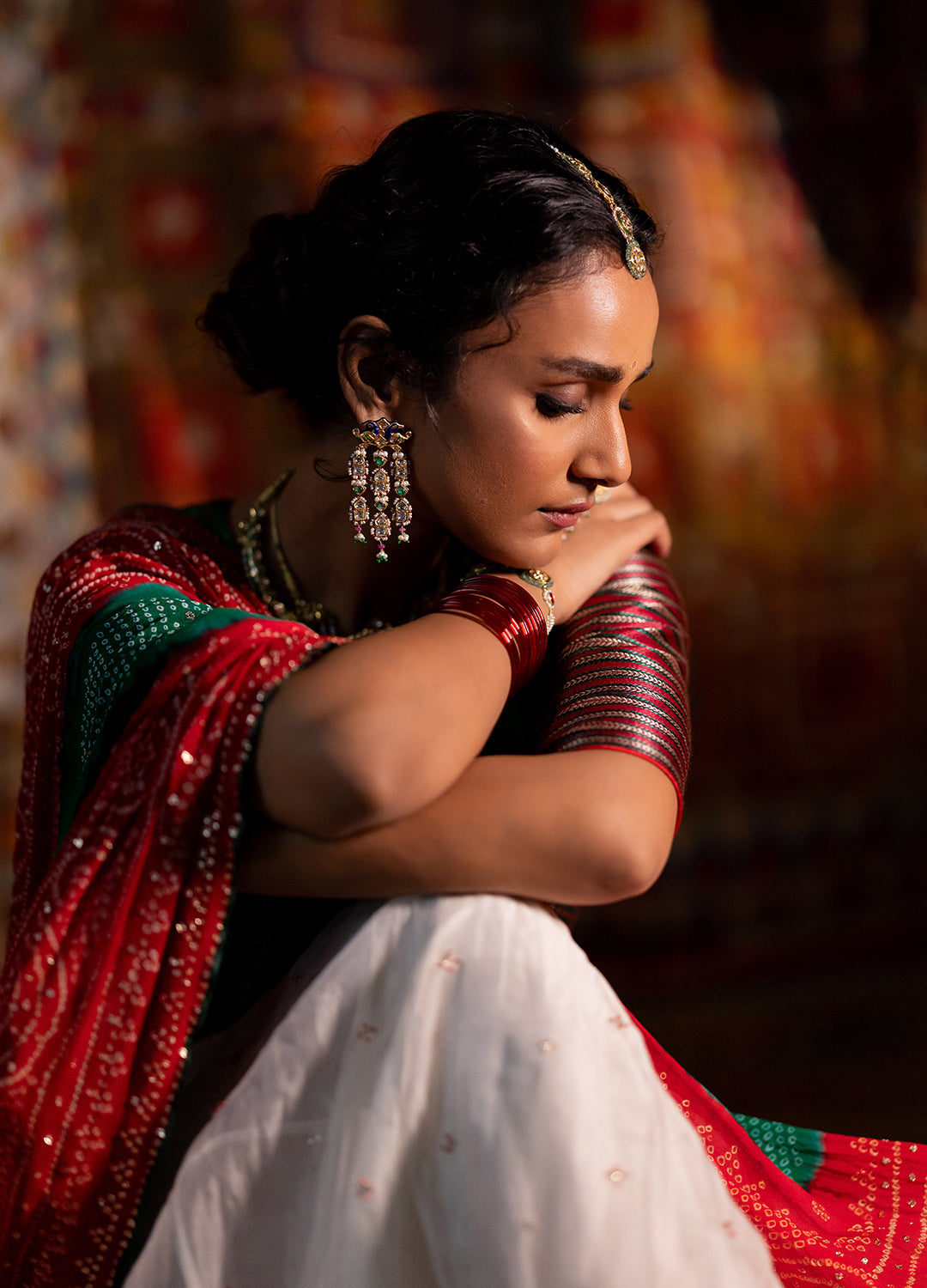
The answer has evolved. Modern brides are embracing tradition, but they're styling it in ways that feel personal and authentic. A complete Indian bridal jewellery set typically includes a statement or layered necklace, bridal earrings, a maangtika, bangles or bracelets, and rings - most often crafted in gold with polki, kundan, or jadau work. Modern brides are keeping this traditional structure but styling it with more restraint, colour, and long-term wearability in mind.
The Classic Bridal Jewellery Set
Most Indian bridal looks are built around a few key pieces:
-
A statement necklace or layered necklaces
-
Bridal earrings
-
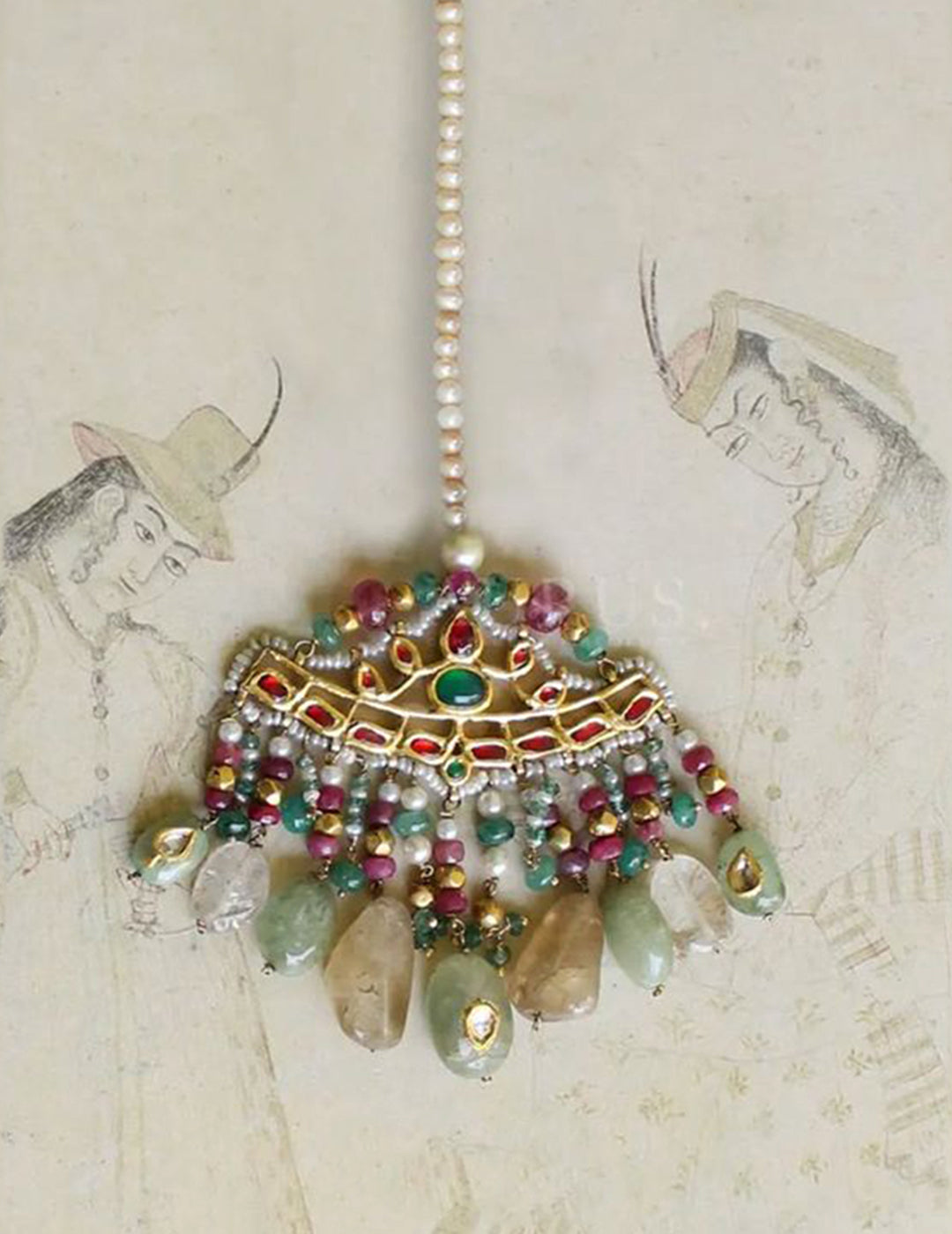
A maangtika or headpiece
-
Bangles or bracelets
-
Rings and hand jewellery
Together, these elements create the richness and grandeur associated with Indian weddings while allowing room for individual expression.

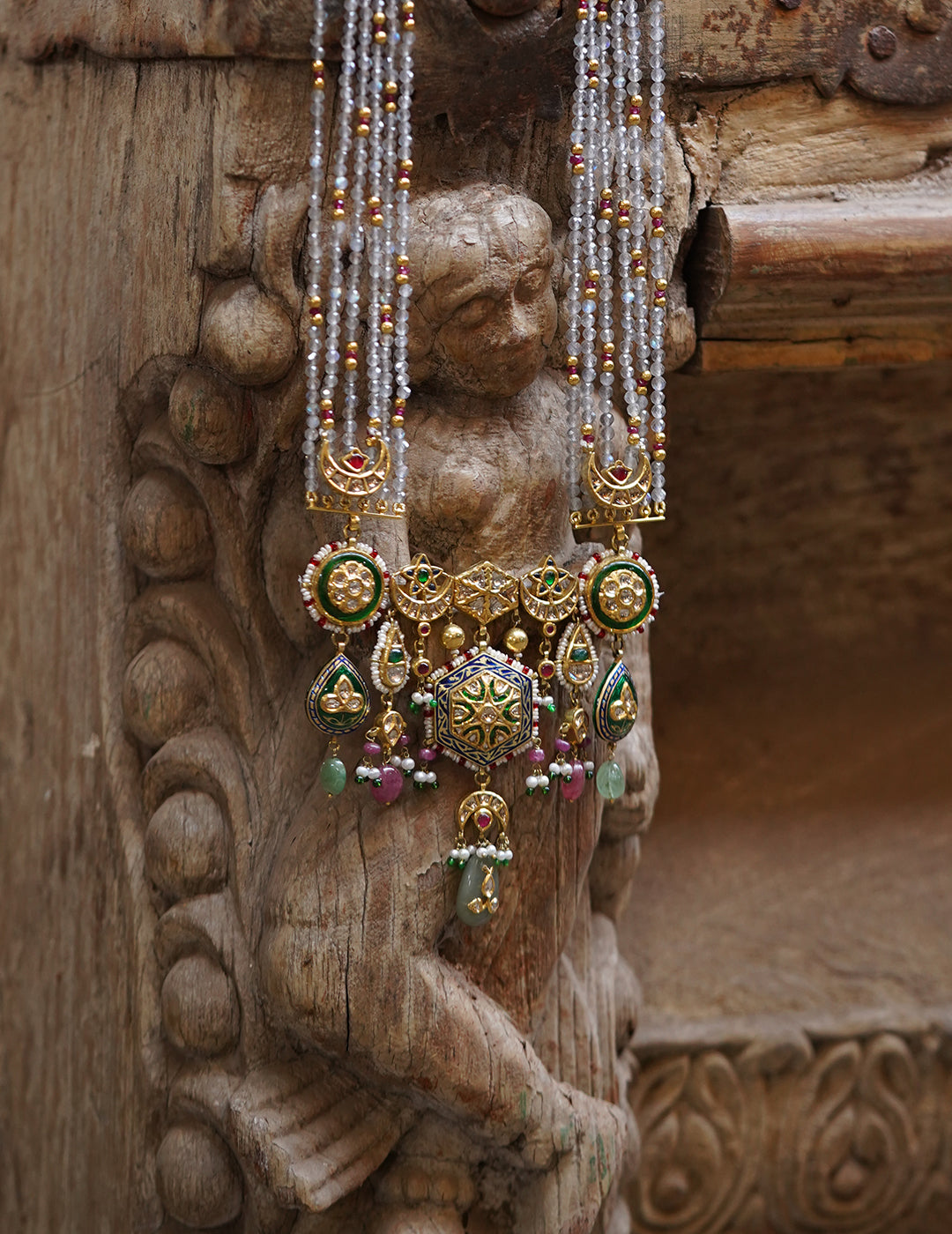
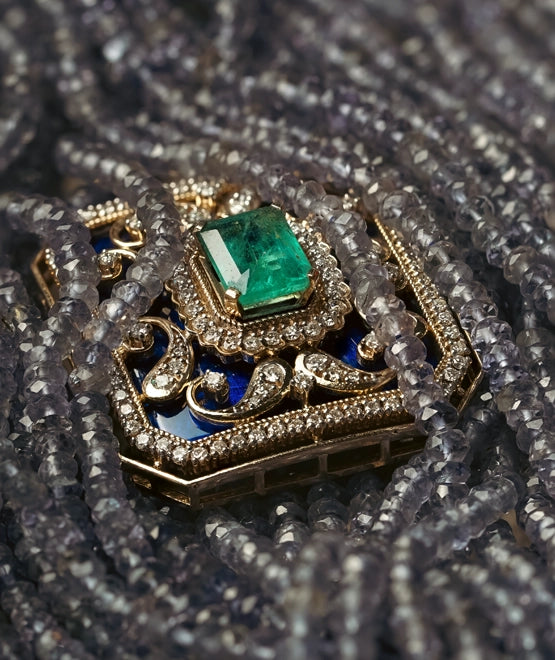
Image: Revant Jaisalmeri Necklace. Inspired from the necklaces worn by the Jaisalmeri royals in the past, Revant is a vibrant long neck piece, handcrafted in gold, with rows of uncut diamonds/polki and gemstone-studded elements designed around a centre hexagonal unit with intricate blue enameling, all strung on lines of labradorite.

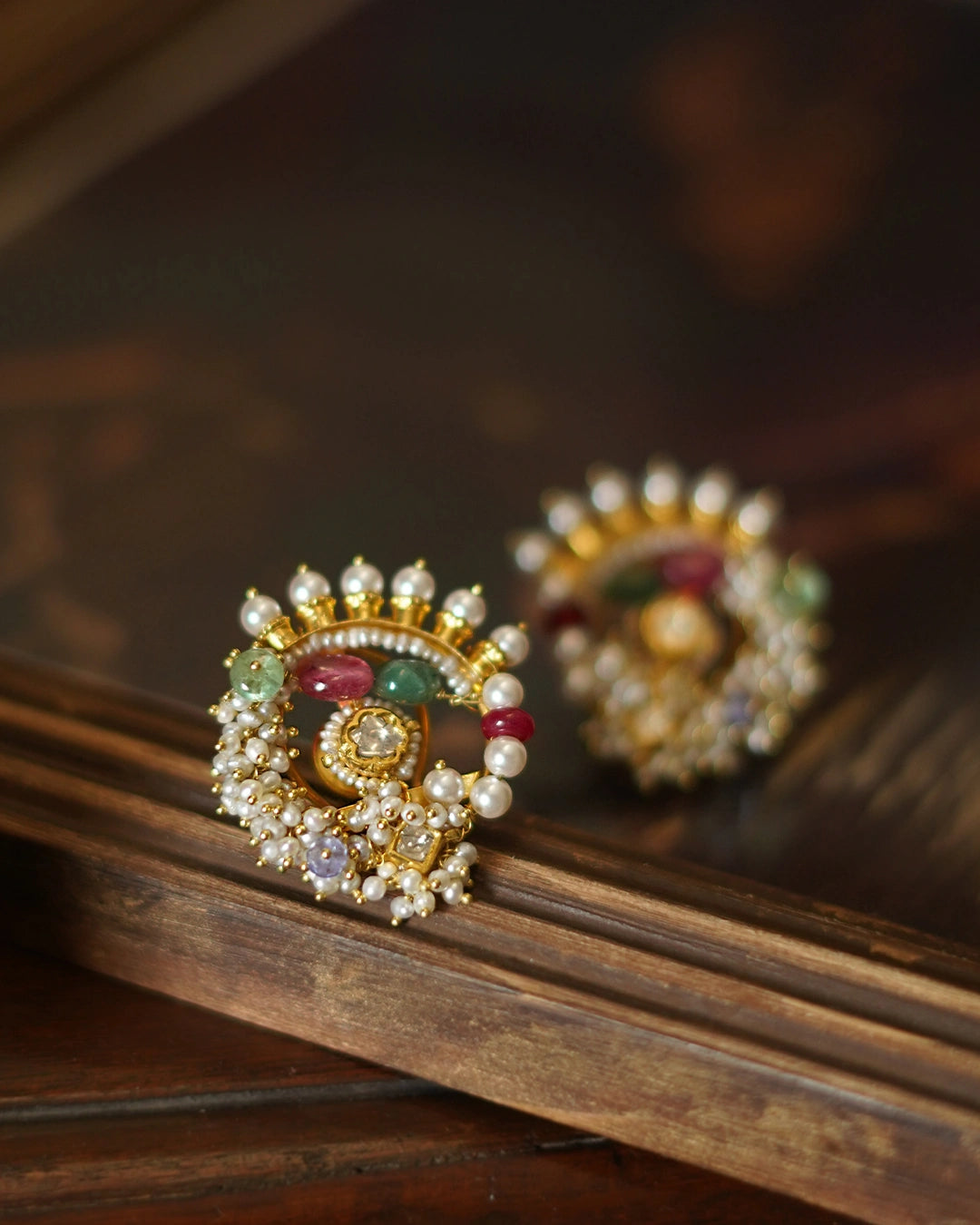
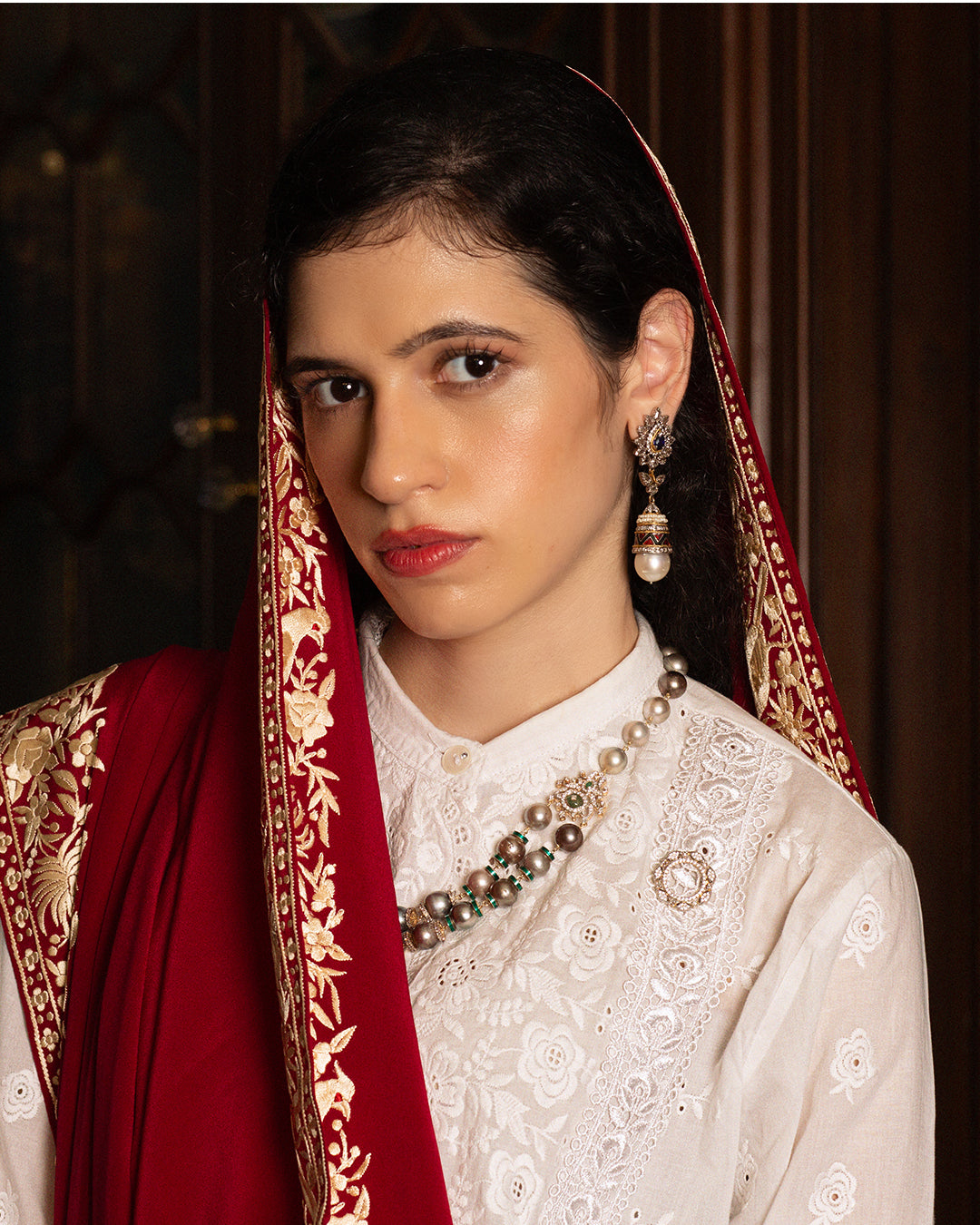
Image: Nandita Earrings. A stunning piece that celebrates our heritage, the Nandita earrings feature a filigree-detailed center that anchors these earrings, accentuated with an emerald in the center surrounded by glass-filled rubies and linked to a dangling cluster of gold balls and a finely detailed roundel set with tourmalines.
Why Polki, Kundan, and Jadau Remain Bridal Favourites
If there is one family of jewellery styles that continues to resonate with brides across generations, it is the heritage trio: polki, kundan, and jadau.
Polki's uncut diamonds create a softer, more organic brilliance compared to modern diamond jewellery, making it elegant rather than flashy and equally beautiful in person and in photographs. Kundan brings a similar warmth through foiled, polished gemstones, while jadau refers to the traditional hand-embedding technique used to set both - a slower, more deliberate process that's part of what makes these pieces feel like heirlooms from the day they're made. Many brides are drawn to this trio because it feels rooted in heritage yet complements contemporary bridal fashion. Our guide to jadau vs kundan vs polki breaks down how each is made and how to choose between them.
Matching Jewellery to Your Bridal Colour Palette
Traditional Red
A red lehenga calls for jewellery with presence. Layered polki necklaces, kundan chokers, chandbalis, and classic gold details enhance the richness of the colour without overwhelming it.
Ivory and Gold
Ivory bridal ensembles have become increasingly popular because they allow intricate jewellery to shine. Emerald-accented necklaces, gemstone-studded chokers, and statement earrings create beautiful contrast against neutral fabrics.
Pastels
Soft pinks, peaches, and powder blues pair wonderfully with pearls, delicate polki work, and subtle gemstone detailing. The overall effect feels fresh, romantic, and modern.
Jewel Tones
Emerald greens, royal blues, and deep wine colours work best with jewellery that carries depth. Polki pieces combined with coloured gemstones create a luxurious look that feels balanced and refined.
Less About Quantity, More About Layering
A common misconception is that bridal jewellery needs to be heavy to look luxurious.
The most elegant bridal looks often rely on thoughtful layering rather than sheer volume. A structured choker paired with a longer necklace creates visual interest. Statement earrings balance the neckline. A beautifully crafted maangtika completes the look.
Each piece has a purpose.
Jewellery That Becomes an Heirloom
Wedding jewellery is often one of the few wedding purchases that remains meaningful long after the celebrations end.
Years later, a necklace may be worn at an anniversary dinner. Earrings may be passed on to a daughter. A maangtika may reappear at another family wedding.
This is why many brides gravitate towards timeless designs instead of trend-driven pieces. Jewellery that feels classic today will feel just as relevant decades from now.
At its heart, Indian bridal jewellery is not about wearing every possible piece. It is about choosing jewellery that reflects your personality, complements your bridal attire, and becomes part of your story.
The most beautiful bridal look is never the heaviest one.
It's the one that feels unmistakably like you.


