












Jewelry has always carried stories within it, stories of craftsmanship, emotion, and sometimes astonishing value. But once in a while, a jewel does something extraordinary. It changes history.
One such moment took place in New York in the early twentieth century, when a necklace of rare pearls helped secure one of the most famous addresses in luxury retail: the iconic mansion that today houses Cartier Fifth Avenue Mansion.
A Changing Fifth Avenue
At the beginning of the 1900s, Fifth Avenue looked very different from the bustling luxury corridor we know today. Grand private residences lined the street, owned by some of America’s wealthiest families. Among them stood the elegant home of businessman Morton Freeman Plant, a stately mansion at the corner of Fifth Avenue and 52nd Street.
Around the same time, the Parisian jewelry house Cartier was expanding its presence in the United States. The brand’s visionary leader in New York, Pierre Cartier, understood that location was everything. A flagship on Fifth Avenue would signal prestige, permanence, and ambition.
The only question was: how to acquire such a remarkable property?
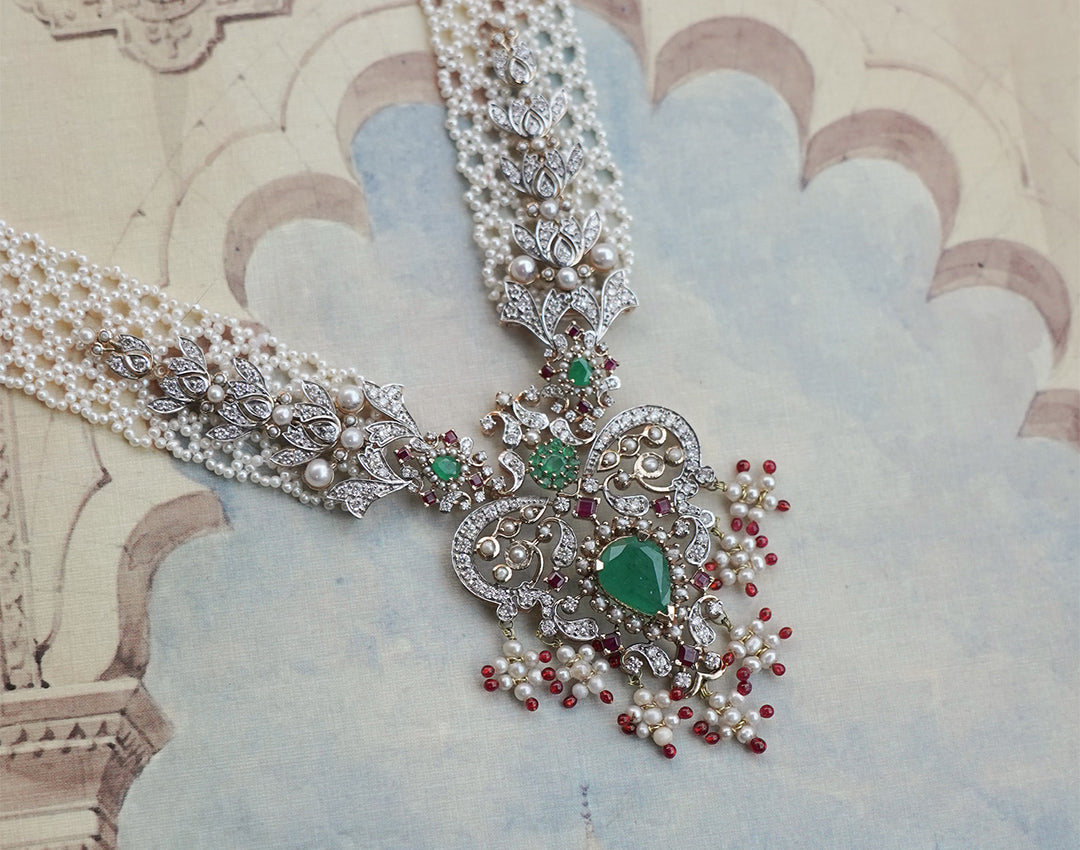
 Image: This three-strand natural pearl necklace was created in 2016 in tribute to Pierre Cartier and his 1917 purchase of the New York mansion. (Picture source: TheJewelleryEditor)
The Necklace That Started It All
The story took a surprising turn when Morton Plant’s wife, Maisie Plant, encountered a pearl necklace that captured her imagination.
The necklace was no ordinary jewel. It was composed of exceptionally rare natural pearls, carefully matched in size, tone, and lustre. In the early 1900s, before cultured pearls became widely available, such pieces were among the most valuable jewels in the world. Creating a perfectly balanced strand required years of collecting pearls that naturally harmonised with one another.
For someone who appreciated beauty and rarity, the necklace was irresistible.
Pierre Cartier saw the opportunity immediately. Instead of negotiating in the conventional way, he proposed something bold: an exchange.
The Plants would receive the extraordinary pearl necklace. In return, Cartier would acquire their Fifth Avenue mansion.
A Legendary Exchange
The agreement was finalised in 1917, in what remains one of the most remarkable transactions in jewelry history. A necklace of pearl, accompanied by a small monetary amount to complete the deal, became the key to securing the mansion.
With that exchange, the residence was transformed into Cartier’s New York home. Over the years, the building evolved from private mansion to legendary boutique, welcoming generations of collectors, royalty, artists, and jewellery lovers.
More than a century later, the mansion continues to stand as a symbol of elegance and heritage on Fifth Avenue.
Why the Story Still Matters
The tale of the necklace and the mansion has endured not simply because of the unusual transaction, but because it captures the timeless allure of pearls.
Before modern pearl cultivation changed the jewelry world, natural pearls were extraordinarily rare. Finding a single beautiful pearl was special, assembling an entire necklace of matching pearls was almost miraculous. Their scarcity meant that they carried immense value, both financially and culturally.
In many ways, that necklace represented more than luxury. It represented patience, rarity, and the artistry of nature itself.
A Jewel That Became a Landmark
Today, visitors to Cartier’s Fifth Avenue mansion may admire glittering showcases filled with diamonds, coloured gemstones, and iconic designs. Yet hidden behind the building’s history is the legend of a necklace that once held enough value to trade for an entire mansion.
It is a reminder that jewelry is never just an ornament. At its most extraordinary, it can shape stories, define eras, and leave a legacy that outlives the jewel itself.
Discover the pearl pieces we have curated and experience their timeless charm.
 Image: Roja Choker. An Indian choker delicately strung on lines of cultured pearls, meeting at an intricately designed centerpiece handcrafted in gold.
 Image: Gajra Pacheli Bangle. The design of this pearl and gold bangle is inspired by the Gajredar bangles and Pachelibangles—bangle types popular in Rajasthan and Northern India.
 Image: Rahaf Choker. Dressed in the timeless elegance of cultured pearls and rose cut diamonds, Rahaf transports you to a dreamy afternoon in a sunlit palace by the river.
Discover more pearl designs click here.


